Physical Address
304 North Cardinal St.
Dorchester Center, MA 02124
Physical Address
304 North Cardinal St.
Dorchester Center, MA 02124

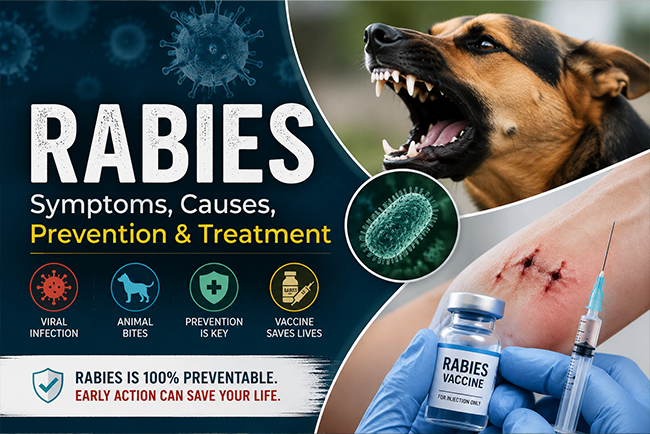
Rabies is a serious viral disease that affects the nervous system of humans and animals. It is usually transmitted through the saliva of an infected animal, most commonly through a bite or scratch. Although rabies is almost always fatal after clinical symptoms develop, rabies is preventable when treatment begins promptly after exposure.
Rabies is a zoonotic viral infection caused by rabies virus. Dogs are responsible for the vast majority of human rabies transmissions worldwide. However, other infected mammals, including bats and certain wild animals, can also spread the virus.
The virus enters the body through broken skin or mucous membranes and can travel through peripheral nerves toward the brain and spinal cord. Once symptoms appear, the disease is considered virtually 100% fatal.
Rabies spreads mainly through the saliva of an infected animal. Common routes include:
Dog bites and scratches account for about 99% of human rabies cases globally.
Read More>>Hantavirus: Symptoms, Causes, Treatment, and Prevention
The rabies incubation period commonly lasts two to three months, although it can range from about one week to one year. Early symptoms may include fever, pain, weakness, and unusual tingling or burning around the wound.
As the infection progresses, symptoms can include:
Once neurological symptoms develop, rabies usually progresses rapidly and is fatal. Therefore, prevention after an exposure is critical.
If you are bitten or scratched by an animal that could have rabies, do not wait for symptoms.
Immediately wash and flush the wound thoroughly with soap and running water for at least 15 minutes. Then seek urgent medical care for a professional exposure assessment and possible rabies post-exposure prophylaxis (PEP).
PEP may include rabies vaccination and, for certain severe exposures, rabies immunoglobulin. When given appropriately and promptly, PEP is highly effective at preventing rabies after exposure.
Read More>>The End of Oak Street: Release Date, Cast, Story, and Everything to Know
The best way to prevent rabies is to reduce exposure and control the disease in animals. Important prevention measures include:
Mass dog vaccination is one of the most effective strategies for preventing human rabies because it stops transmission at its primary source.
Rabies is a life-threatening disease, but rabies deaths are preventable. Prompt wound washing, professional medical assessment, and appropriate post-exposure treatment can prevent infection before symptoms begin. If you have experienced a potentially risky animal bite or scratch, seek medical care immediately rather than waiting for symptoms.
This article is for educational purposes and does not replace professional medical advice.