Physical Address
304 North Cardinal St.
Dorchester Center, MA 02124
Physical Address
304 North Cardinal St.
Dorchester Center, MA 02124

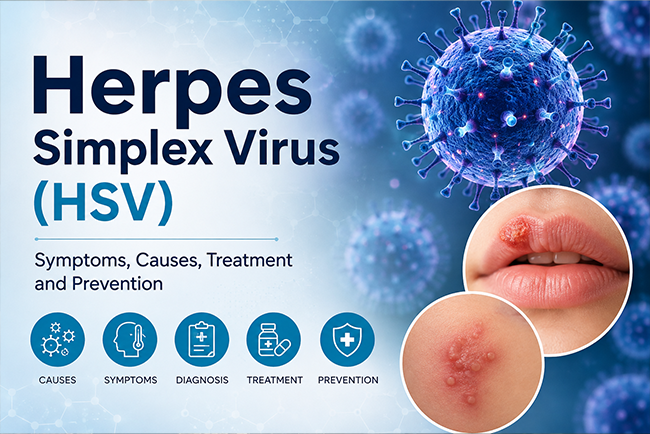
Herpes Simplex Virus (HSV) is a common viral infection that affects millions of people worldwide. HSV can cause sores around the mouth, genitals, or other areas of the skin. Although there is no cure that completely removes the virus from the body, effective treatments can help control symptoms and reduce the risk of transmission.
Herpes Simplex Virus is a virus that remains in the body after infection. There are two main types: HSV-1 and HSV-2.
HSV-1 most commonly causes oral herpes, which can lead to cold sores around the lips and mouth. However, HSV-1 can also cause genital herpes. HSV-2 mainly causes genital herpes and is usually spread through sexual contact.
HSV spreads through direct contact with infected skin, sores, or bodily fluids. Transmission can occur through kissing, oral sex, vaginal sex, or anal sex. Importantly, HSV can sometimes spread even when there are no visible sores because the virus may be present on the skin.
Using condoms or dental dams can reduce the risk of transmission, although they cannot provide complete protection because infected areas may not be covered.
Read More>>HIV/AIDS: Symptoms, Causes, Prevention, and Treatment
Some people with HSV have no noticeable symptoms. When symptoms occur, they may include:
The first outbreak may be more severe than later episodes. Symptoms can also vary significantly from person to person.
A healthcare professional may diagnose HSV by examining visible sores. A sample from a sore can also be tested using laboratory methods such as a PCR test. Blood tests may sometimes help determine whether a person has been exposed to HSV, although they cannot always identify the location or timing of an infection.
If you notice unexplained sores around the mouth or genitals, consult a healthcare professional for appropriate testing.
Read More>>Spa Weekend: Release Date, Cast, Story, and Everything You Need to Know
There is currently no cure for Herpes Simplex Virus. However, antiviral medicines such as acyclovir, valacyclovir, and famciclovir can help shorten outbreaks and reduce symptoms.
For people with frequent outbreaks, healthcare providers may recommend daily suppressive therapy. This approach can also lower, but not eliminate, the risk of passing genital herpes to a partner.
Keeping the affected area clean and dry and avoiding contact with sores can also help reduce discomfort and transmission.
Reducing HSV transmission involves several precautions:
Pregnant people with genital herpes should inform their healthcare provider because HSV can sometimes be transmitted to a newborn during childbirth.
Seek medical advice if you develop painful or recurring sores, have concerns about possible HSV exposure, or experience symptoms during pregnancy. Early diagnosis can help with treatment and prevention.
Herpes Simplex Virus (HSV) is common and manageable, even though it remains in the body permanently. Understanding how HSV spreads, recognizing symptoms, seeking appropriate testing, and using antiviral treatment can help people manage the infection and reduce transmission. If you suspect HSV, speaking with a qualified healthcare professional is the best way to receive personalized advice.