Physical Address
304 North Cardinal St.
Dorchester Center, MA 02124
Physical Address
304 North Cardinal St.
Dorchester Center, MA 02124
The thyroid is a small, butterfly-shaped gland located in the front of the neck. It plays a vital role in regulating metabolism, energy production, growth, and body temperature. When the thyroid produces too much or too little hormone, a thyroid disorder develops. These imbalances can affect nearly every system in the body. Therefore, recognizing thyroid disorder symptoms early is essential for timely diagnosis and effective management.
Thyroid disorders mainly include hypothyroidism, hyperthyroidism, and structural problems like goiter or thyroid nodules. Hypothyroidism occurs when the gland produces insufficient hormones. In contrast, hyperthyroidism develops when hormone production becomes excessive. Each condition shows distinct symptoms, although some signs may overlap. Understanding these differences helps patients seek appropriate medical care sooner.
Many thyroid disorder symptoms appear gradually and may seem mild at first. Fatigue, unexplained weight changes, and mood disturbances are common early signs. People often ignore these symptoms because they resemble everyday stress or lifestyle issues. However, persistent changes in energy, appetite, or temperature tolerance often indicate an underlying thyroid imbalance.
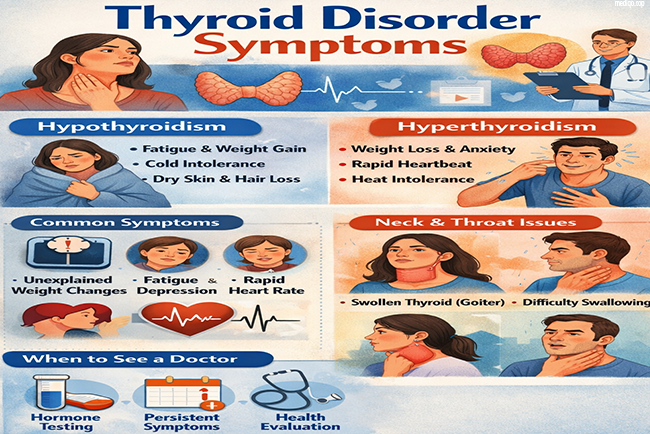
Hypothyroidism slows down many body functions. People with this condition often experience constant tiredness and weight gain despite normal eating habits. Cold intolerance becomes common, even in warm environments. Dry skin, hair thinning, and brittle nails may also appear. Additionally, constipation, slow heart rate, and depression frequently develop as hormone levels drop. In some cases, memory problems and difficulty concentrating can affect daily activities.
Hyperthyroidism accelerates the body’s systems. Unintentional weight loss often occurs despite increased appetite. People may feel nervous, restless, or unusually anxious. Heat intolerance and excessive sweating become noticeable, especially during mild activity. A rapid or irregular heartbeat often accompanies these symptoms. Furthermore, muscle weakness, tremors in the hands, and difficulty sleeping can disrupt normal routines. Women may also notice changes in menstrual cycles.
Women are more likely to develop thyroid disorders than men. Hormonal changes during pregnancy, menopause, or after childbirth can trigger symptoms. Irregular periods, fertility issues, and hair loss often raise early concerns. Mood swings and anxiety may worsen during hormonal transitions. Therefore, women should monitor subtle changes and discuss them with a healthcare professional.
Although less common, thyroid disorders in men can still cause significant health issues. Reduced muscle strength and unexplained weight changes are frequent signs. Men may also experience low libido and mood changes. In some cases, thyroid problems contribute to heart-related complications. Early detection helps prevent long-term effects on physical performance and overall well-being.
Some thyroid disorders cause the gland to enlarge, leading to a condition known as goiter. A visible swelling at the base of the neck often appears. People may experience difficulty swallowing or a constant feeling of pressure in the throat. Hoarseness and breathing discomfort can also develop if the enlargement presses on nearby structures.
Thyroid disorder symptoms should never be ignored when they persist or worsen. Early testing through blood work helps confirm hormone imbalances. Prompt treatment can restore hormone levels and reduce complications. Therefore, individuals experiencing ongoing fatigue, weight changes, or heart irregularities should consult a healthcare provider.
Read more >> Sickle Cell Disease: Causes and Modern Treatment Options
Thyroid disorder symptoms affect physical, emotional, and mental health. Since these symptoms often mimic other conditions, awareness plays a crucial role in early diagnosis. With proper medical care and lifestyle adjustments, most thyroid disorders can be managed effectively. Paying attention to subtle changes in the body supports long-term health and improved quality of life.