Physical Address
304 North Cardinal St.
Dorchester Center, MA 02124
Physical Address
304 North Cardinal St.
Dorchester Center, MA 02124

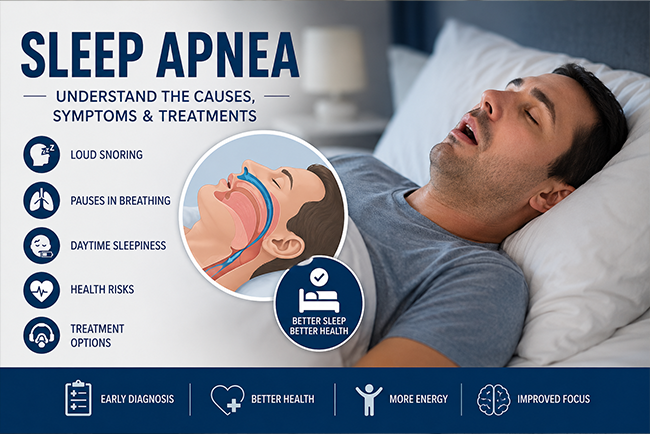
Sleep apnea is a common but serious sleep disorder that affects millions of people worldwide. It causes breathing to repeatedly stop and start during sleep, leading to poor sleep quality and various health complications. Although many people may not realize they have sleep apnea, early diagnosis and treatment can significantly improve overall health and quality of life.
Sleep apnea is a condition in which a person’s breathing repeatedly pauses while sleeping. These interruptions can occur dozens or even hundreds of times throughout the night. As a result, the brain and body receive less oxygen, which disrupts restful sleep.
There are three main types of sleep apnea:
This is the most common type. It occurs when the muscles in the throat relax excessively and block the airway during sleep.
Unlike OSA, central sleep apnea happens when the brain fails to send proper signals to the muscles responsible for breathing.
This condition combines both obstructive and central sleep apnea symptoms.
Recognizing the symptoms of sleep apnea is essential because many people remain undiagnosed for years. Common signs include:
If you experience several of these symptoms, it is important to consult a healthcare professional.
Read More>>PCOS (Polycystic Ovary Syndrome)
Several factors can increase the risk of developing sleep apnea. These include:
Obesity is one of the leading causes of obstructive sleep apnea. Fat deposits around the upper airway can restrict breathing.
Sleep apnea becomes more common as people get older. However, it can affect individuals of any age.
Genetics may play a role in increasing the likelihood of developing the condition.
Both smoking and alcohol consumption can contribute to airway inflammation and muscle relaxation, increasing the risk of breathing interruptions.
Certain health issues, such as high blood pressure, diabetes, and heart disease, are closely linked to sleep apnea.
Untreated sleep apnea can lead to serious health complications. Therefore, seeking medical attention is crucial.
Some potential risks include:
Furthermore, chronic sleep deprivation can negatively affect both physical and mental well-being.
Read More>>Jamie Lynn Spears Reflects on Daughter Maddie’s Near
Doctors typically diagnose sleep apnea through a sleep study, also known as polysomnography. During this test, healthcare professionals monitor breathing patterns, oxygen levels, heart rate, and brain activity while you sleep.
In some cases, home sleep tests may also help identify the condition.
Fortunately, several effective treatment options are available.
Many patients experience improvement by:
CPAP therapy is considered the gold standard treatment for obstructive sleep apnea. The device delivers steady air pressure through a mask, keeping the airway open during sleep.
Special dental devices can reposition the jaw and tongue to improve airflow.
In severe cases, surgery may help remove excess tissue or correct structural airway problems.
Sleep apnea is more than just loud snoring. It is a serious medical condition that can affect heart health, mental well-being, and overall quality of life. However, with early diagnosis and proper treatment, most people can successfully manage their symptoms and enjoy healthier sleep.
If you suspect that you or a loved one may have sleep apnea, consult a healthcare professional as soon as possible. Better sleep can lead to better health, increased energy, and an improved quality of life.