Physical Address
304 North Cardinal St.
Dorchester Center, MA 02124
Physical Address
304 North Cardinal St.
Dorchester Center, MA 02124

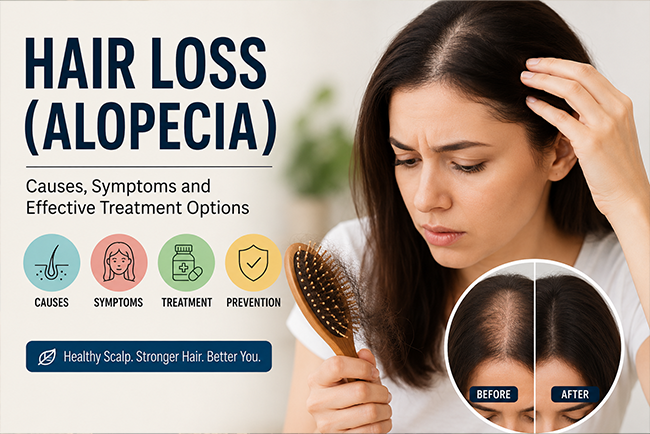
Hair loss, medically known as Alopecia, is a common condition that affects millions of people worldwide. It can occur gradually or suddenly and may impact the scalp, eyebrows, beard, or other body areas. While losing 50–100 hairs daily is normal, excessive hair shedding may indicate an underlying health issue.
Understanding the causes of hair loss is the first step toward effective treatment. Some of the most common reasons include:
Read More>>Acne Vulgaris: Causes, Symptoms, Treatment
Androgenetic alopecia, also known as male or female pattern baldness, is the most common form of hair loss. It often runs in families.
Pregnancy, menopause, thyroid disorders, and hormonal imbalances can trigger temporary or long-term hair loss.
Low levels of iron, zinc, vitamin D, and protein can weaken hair follicles and contribute to alopecia.
Physical or emotional stress may cause excessive hair shedding, known as telogen effluvium.
Autoimmune diseases such as alopecia areata, scalp infections, and chronic illnesses can lead to hair loss.
The symptoms of alopecia vary depending on the type and cause. Common signs include:
Early identification of these symptoms can help prevent further hair loss.
Read More>>Scotland vs Brazil: FIFA World Cup 2026 Match Preview
Treatment for alopecia depends on the underlying cause. Some effective options include:
Doctors may recommend medications such as Minoxidil or Finasteride for pattern hair loss. These treatments can help slow hair loss and promote regrowth.
A balanced diet rich in vitamins, minerals, and protein supports healthy hair growth. Supplements may be recommended if deficiencies are identified.
For advanced hair loss, hair transplantation can provide long-lasting and natural-looking results.
Regular exercise, meditation, and proper sleep can reduce stress-related hair loss.
Maintaining a clean and healthy scalp can improve hair follicle health and reduce damage.
While not all forms of alopecia can be prevented, these habits may help maintain healthy hair:
Consult a healthcare professional if you experience sudden hair loss, patchy bald spots, scalp irritation, or significant hair thinning. Early diagnosis can improve treatment outcomes and prevent permanent hair loss.
Hair loss (Alopecia) is a common condition with many possible causes, including genetics, hormonal changes, stress, and nutritional deficiencies. Fortunately, several effective treatments and preventive measures are available. If you notice unusual hair shedding or thinning, seeking professional advice can help identify the cause and restore healthy hair growth.