Physical Address
304 North Cardinal St.
Dorchester Center, MA 02124
Physical Address
304 North Cardinal St.
Dorchester Center, MA 02124

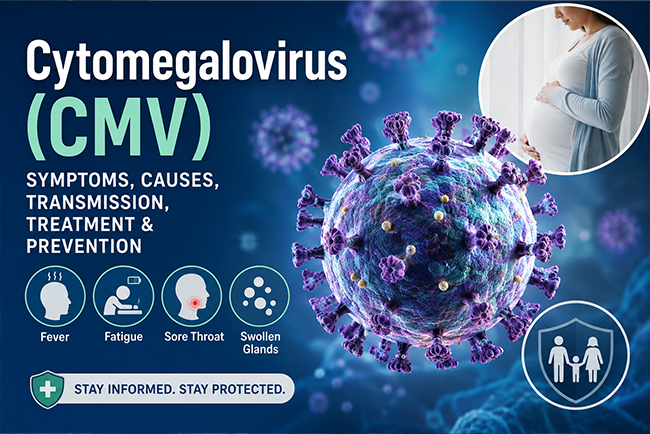
Cytomegalovirus (CMV) is a common virus that belongs to the herpesvirus family. It can infect people of all ages. After infection, CMV remains in the body for life and can become inactive or reactivate later. Most healthy people have no symptoms or develop only mild illness.
CMV is usually not dangerous for healthy adults. However, it can cause serious complications in newborns and people with weakened immune systems.
Cytomegalovirus spreads through contact with infected body fluids. These fluids can include saliva, urine, blood, tears, semen, and breast milk. It can also spread through sexual contact, blood transfusions, organ transplantation, and from a pregnant person to a developing baby.
Young children are a common source of CMV. Therefore, people who regularly care for young children may have a higher chance of exposure.
Read More>>Herpes Simplex Virus (HSV): Symptoms, Causes, Treatment, and Prevention
Most people with CMV do not know they are infected because they have no symptoms. When symptoms occur, they may resemble a mild flu-like illness.
Common CMV symptoms can include:
In some healthy adults, CMV can cause a mononucleosis-like illness or, less commonly, liver inflammation.
People with weakened immune systems may develop more serious CMV disease. Complications can affect organs such as the eyes, lungs, liver, digestive system, and nervous system.
CMV is especially important during pregnancy because an infected pregnant person can pass the virus to the developing baby. When a baby is born with CMV infection, it is called congenital CMV.
Many babies with congenital CMV have no symptoms. However, some can develop serious health problems, including hearing loss, vision problems, developmental delays, seizures, jaundice, and problems affecting the brain, liver, or spleen. Hearing loss can also appear later, even when a baby has no symptoms at birth.
Read More>>Hot Spot: Release Date, Story, Cast, and Everything We Know About the Sci-Fi Thriller
Healthcare professionals can use laboratory tests to detect CMV. Blood testing may be used for adults with symptoms. For newborns, saliva or urine testing is preferred, and testing should be performed within two to three weeks after birth when congenital CMV is suspected.
A healthcare professional can determine which test is appropriate based on age, symptoms, pregnancy status, and immune health.
Healthy people with CMV usually do not need specific treatment because their immune system controls the infection. However, antiviral medicines may be used for certain people with weakened immune systems or babies with symptomatic congenital CMV. These medicines require medical supervision because they can cause significant side effects.
There is no guaranteed way to eliminate the risk of CMV infection. However, good hygiene can reduce exposure, particularly around young children.
Helpful steps include:
These precautions are particularly important during pregnancy.
Contact a healthcare professional if you develop symptoms that concern you, have a weakened immune system, or are pregnant and worried about possible CMV exposure. Newborns suspected of having congenital CMV should receive prompt medical evaluation.
Cytomegalovirus (CMV) is widespread and usually causes little or no illness in healthy people. However, pregnancy, infancy, and weakened immunity can increase the risk of complications. Understanding CMV symptoms, transmission, prevention, and treatment can help reduce unnecessary risks and support early medical care when needed.