Physical Address
304 North Cardinal St.
Dorchester Center, MA 02124
Physical Address
304 North Cardinal St.
Dorchester Center, MA 02124
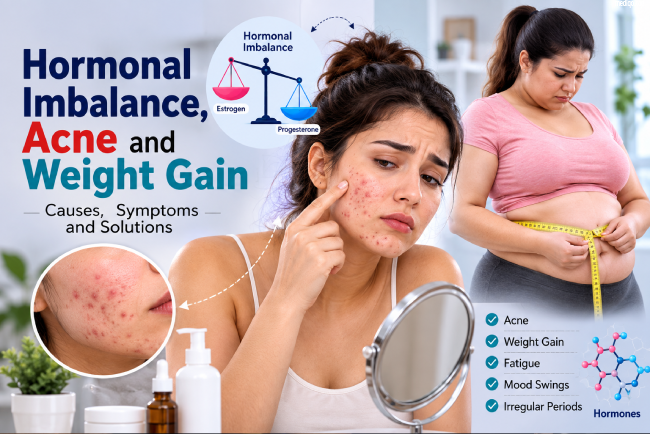
Hormonal imbalance, acne and weight gain can sometimes appear together, especially when hormone levels affect metabolism, oil production and reproductive health. However, these symptoms do not always have one single cause. Understanding the possible connection can help you decide when medical evaluation may be needed.
Hormones influence the skin’s oil glands. When androgen activity increases, the glands can produce more sebum. Excess oil can clog pores and contribute to inflammation and breakouts. Hormonal changes around menstruation, pregnancy, menopause or changes in birth control can also trigger adult acne.
Hormonal acne often appears around the chin, jawline and lower face. Some people may also develop acne on the chest or back. Persistent or newly developed adult acne can sometimes signal an underlying hormonal condition.
Hormones also influence appetite, blood sugar regulation, fat storage and metabolism. Therefore, certain hormonal disorders can make weight management more difficult. However, weight gain alone does not prove that you have a hormonal imbalance.
Lifestyle, medications, sleep, stress and other health conditions can also affect body weight. A healthcare professional can assess the overall pattern rather than relying on one symptom.
Read more >> Menopause Symptoms at an Early Age: Key Warning Signs
One important condition associated with hormonal acne and weight changes is polycystic ovary syndrome (PCOS). PCOS can involve hormonal and metabolic changes. Common symptoms include irregular periods, acne, increased facial or body hair, scalp hair thinning, weight gain or difficulty losing weight, and darkened skin in certain areas.
Having acne and weight gain does not automatically mean you have PCOS. Doctors usually consider several symptoms, medical history and appropriate examinations before making a diagnosis.
If acne develops alongside irregular periods, unwanted facial hair, scalp hair loss or unexplained difficulty losing weight, it is reasonable to discuss these symptoms with a healthcare professional.
PCOS is only one possible explanation. Thyroid disorders, certain medications, stress-related hormonal changes and other endocrine conditions may also contribute to changes in weight or skin.
Hormonal fluctuations can occur naturally during different stages of life. Starting or stopping hormonal contraception can also affect acne in some people.
Therefore, it is important to avoid assuming that every case of acne or weight gain comes from “hormonal imbalance.”
Treatment depends on the underlying cause and the severity of the acne. Dermatologists may recommend topical treatments such as retinoids, benzoyl peroxide, salicylic acid or azelaic acid. Some people with persistent hormonal acne may benefit from prescription hormonal treatments, including certain oral contraceptives or spironolactone.
Do not start hormonal medication without professional guidance. Some treatments have important risks, interactions or pregnancy-related precautions.
A gentle skincare routine can also help. Choose non-comedogenic products, avoid aggressive scrubbing and give treatments enough time to work.
Consider medical evaluation if acne suddenly becomes severe, keeps returning despite treatment or appears together with significant weight changes. You should also seek advice if you experience irregular or absent periods, excessive facial hair, scalp hair loss or darkened, thickened skin.
Early evaluation can help identify conditions such as PCOS or other hormonal disorders. Appropriate treatment may then address both the underlying problem and its symptoms.
Hormonal imbalance, acne and weight gain can be connected, but they should not automatically be treated as one condition. Hormonal changes may influence oil production and metabolism, while conditions such as PCOS can produce several symptoms at the same time.
If these symptoms occur together or persist, professional evaluation is the safest approach. With the right diagnosis and treatment plan, hormonal acne and related weight concerns can often be managed effectively.
Medical disclaimer: This article is for educational purposes only. It does not replace diagnosis, treatment or personalized advice from a qualified healthcare professional.